Category: Uncategorized
-

Workplace violence and PTSD pose significant risks to organizations, with severe financial implications from neglecting prevention. Costs encompass legal liabilities, turnover, and decreased productivity. A proactive approach rooted in Theory Y leadership is essential for fostering psychological safety. Investing in prevention strategies enhances employee well-being and reduces overall financial risk, promoting long-term success.
-
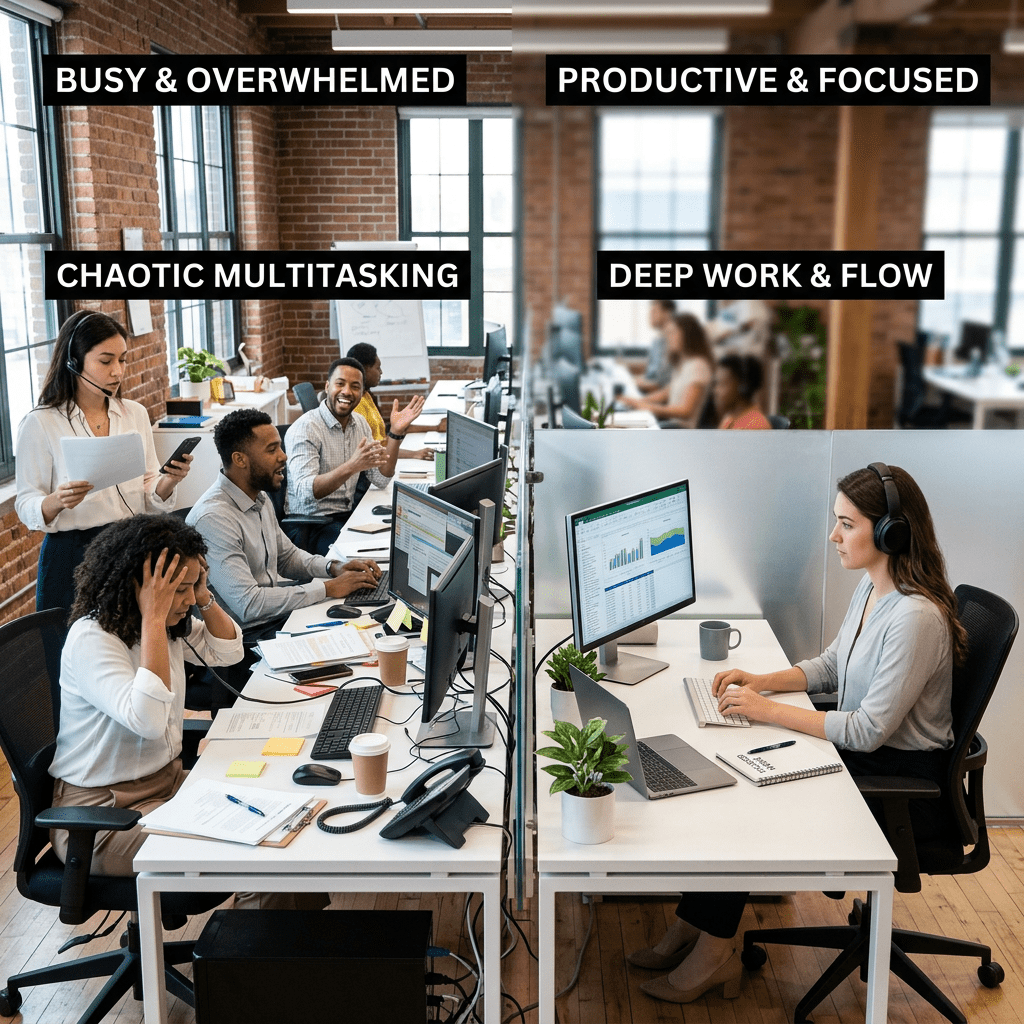
Dr. Stephanie Diana Eubank argues that equating busyness with productivity harms creativity and innovation. Research shows that excessive activity, including constant interruptions and multitasking, reduces cognitive performance. Remote work can enhance productivity by focusing on outcomes rather than presence, promoting conditions necessary for creativity, strategic thinking, and employee well-being.
-

Remote work has transformed the economy, reshaping housing markets and regional development. The pandemic prompted a migration from urban centers to suburban and rural areas, increasing housing demand and revitalizing stagnant markets. This shift not only supports local economies through infrastructure investment but also enhances housing accessibility, family stability, and overall economic resilience.
-

Remote and hybrid work increasingly defines modern organizations, yet its distribution remains inequitable, favoring leaders over non-management employees. This structural imbalance affects trust and engagement. Expanding remote work accessibility based on job requirements rather than rank can enhance productivity, employee retention, and organizational cohesion, promoting equity and resilience.
-

Remote work is increasingly recognized as a productivity enhancer rather than a limitation. It fosters employee satisfaction, reduces turnover, and lowers hiring costs by broadening talent access. Organizations that embrace remote work can achieve greater efficiency and accountability, making it a strategic advantage in today’s competitive labor market.
-

The author announces the completion of their Operations Management textbook, focusing on modern workplace issues like remote work, leadership, and inclusivity. The manuscript is currently being edited. Future projects include the Steinbeck Project, related research, conference proposals, and consulting on organizational design for hybrid workforces. Exciting developments are anticipated.
-

The emergence of remote and hybrid work necessitates a shift in leadership styles from traditional top-down approaches to those emphasizing trust, communication, and coaching. Leaders must adopt teaching-centered roles to foster collaboration and development in distributed environments. Resistance to this evolution often stems from outdated leadership strategies rather than the effectiveness of remote work itself.
-

Emotional isolation in remote work leads to feelings of loneliness, anxiety, and burnout, even with frequent communication. Studies suggest that remote employees benefit from intentional relationship-building, supportive practices, and reduced surveillance. To foster connection, organizations should prioritize community, psychological safety, and humane boundaries to improve overall well-being and performance.
-

March is Women’s History Month, emphasizing the impact of remote work on women’s participation in the workforce. With women performing the majority of unpaid caregiving, remote work provides essential flexibility, enabling them to balance professional and personal responsibilities. Organizations should support remote work to promote gender equity and retain skilled women.
-

Dr. Stephanie Diana Eubank highlights the challenges of organizational isolation for remote workers, including communication barriers and limited access to decision-makers. This isolation negatively impacts collaboration, job satisfaction, and well-being. She offers strategies for both workers and leaders to foster transparency and community, improving overall engagement and performance.

