By: Dr. Stephanie Diana Eubank DBA
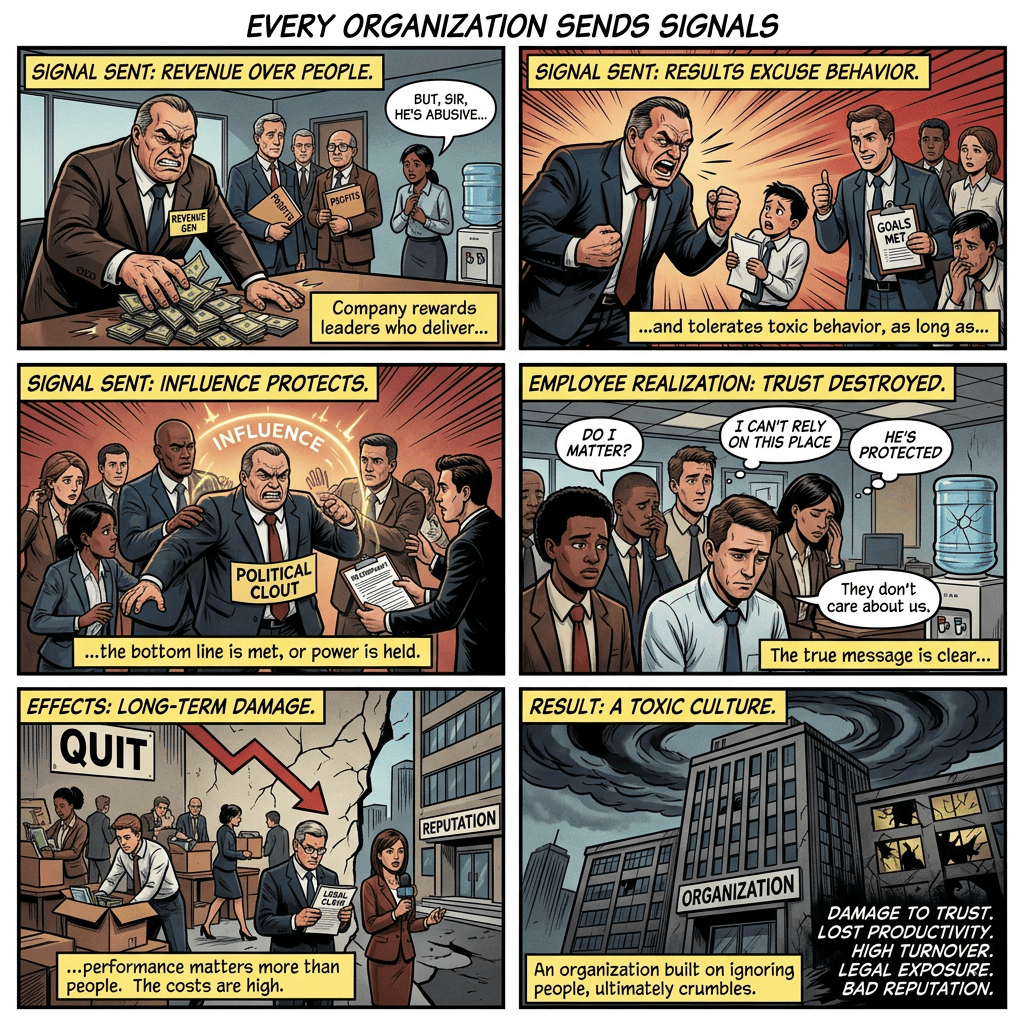
Every organization sends signals through the behaviors it rewards, tolerates, and excuses. When companies repeatedly protect abusive leaders because they generate revenue, deliver results, or maintain political influence, they send a powerful message to employees: performance matters more than people. The result is not only damage to trust and engagement, but also long-term costs in productivity, retention, reputation, and legal exposure.
Employees closely observe how leadership responds to complaints about bullying, intimidation, favoritism, retaliation, or other abusive conduct. When credible concerns are ignored, minimized, or explained away, workers often conclude that psychological safety is absent and that reporting problems may harm their careers. Research has linked tyrannical and abusive leadership with workplace bullying, turnover intentions, emotional exhaustion, and job insecurity.
Employees who feel devalued are less likely to demonstrate discretionary effort, innovation, collaboration, and organizational commitment. Toxic leadership environments frequently create distraction, stress, and disengagement. Instead of focusing energy on organizational goals, employees devote time and emotional resources to self-protection, conflict avoidance, or finding a new job. Over time, high-performing employees often leave, while remaining employees may experience reduced engagement and increased cynicism.
Organizations that tolerate abusive leaders often experience elevated turnover. Recruitment, onboarding, training, and lost institutional knowledge create significant replacement costs. Beyond direct expenses, constant turnover disrupts team cohesion, customer relationships, and operational continuity. Research consistently shows connections between abusive supervision, workplace bullying, and turnover intentions.
Employers that fail to address abusive behavior may also increase exposure to complaints, investigations, and litigation when misconduct crosses into unlawful harassment, discrimination, retaliation, or hostile work environment claims. The U.S. Equal Employment Opportunity Commission (EEOC) notes that unlawful harassment can create intimidating, hostile, or abusive work environments and encourages employers to establish effective reporting systems, training, and corrective actions.
How Companies Can Do Better
- Hold leaders accountable for behavior, not just business results.
- Include leadership behavior metrics in performance evaluations.
- Create confidential and trusted reporting channels.
- Investigate complaints promptly, objectively, and consistently.
- Protect employees from retaliation.
- Provide leadership coaching and development focused on emotional intelligence.
- Conduct regular climate and engagement surveys.
- Tie promotions and bonuses to demonstrated people leadership skills.
- Model respect, inclusion, and transparency from the executive level.
- Act decisively when patterns of abusive behavior are identified.
The true culture of an organization is revealed by what it tolerates. When companies excuse abusive leaders, they communicate that employee well-being is secondary to protecting power. Organizations that prioritize accountability, respect, and psychological safety are more likely to retain talent, strengthen morale, increase productivity, and reduce legal risk.
Author Book Spotlight
Stephanie Eubank is the author of a book currently available on Amazon. This article can include a customized promotional blurb, book title, and Amazon link. Example: “If you enjoy practical insights on leadership, workplace culture, neurodiversity, and organizational effectiveness, be sure to check out Stephanie Eubank’s latest book, now available on Amazon.”
References (APA 7th Edition)
Trepanier, S.-G., Peterson, C., Fernet, C., & Austin, S. (2024). How tyrannical leadership relates to workplace bullying and turnover intention over time: The role of coworker support. Scandinavian Journal of Psychology, 65, 469-478. https://doi.org/10.1111/sjop.12982
Li, M., Ahmed, A., Syed, O. R., Khalid, N., & Munoz, J. E., Jr. (2022). Impact of abusive leader behavior on employee job insecurity: A mediating roles of emotional exhaustion and abusive peer behavior. Frontiers in Psychology, 13, 947258. https://doi.org/10.3389/fpsyg.2022.947258
U.S. Equal Employment Opportunity Commission. (n.d.). Harassment. https://www.eeoc.gov/harassment
Book Information
Remote Work Is Here to Stay: Rethinking Operations Management in the Modern Work Era
Available on Amazon: https://www.amazon.com/dp/B0H5BPJCHJ
If you enjoy this content like and subscribe. Additionally, if you are interested in consulting services, please feel free to reach out to me through my social media channels. Remember remote is here to stay.
YouTube: https://www.youtube.com/@Wickedbofthewest
Website: wickedbofthewestremoteconsulting.com
Facebook: https://www.facebook.com/WickedBoftheWestBusinessConsulting
Instagram: https://www.instagram.com/wickedbofthewestconsulting/
Blog: drstephaniebeardbaremoteresearch.org
LinkedIn: https://www.linkedin.com/in/stephanie-diana-eubank-dba/
TikTok: https://www.tiktok.com/@ DrStephanieDEubank
New Website: wickedbofthewestconsulting.com
Email: stephaniedeubank@gmail.com
TikTok: @ DrStephanieDEubank
New Website: wickedbofthewestconsulting.com
 Wicked B of the West Business Consulting
Leave a comment